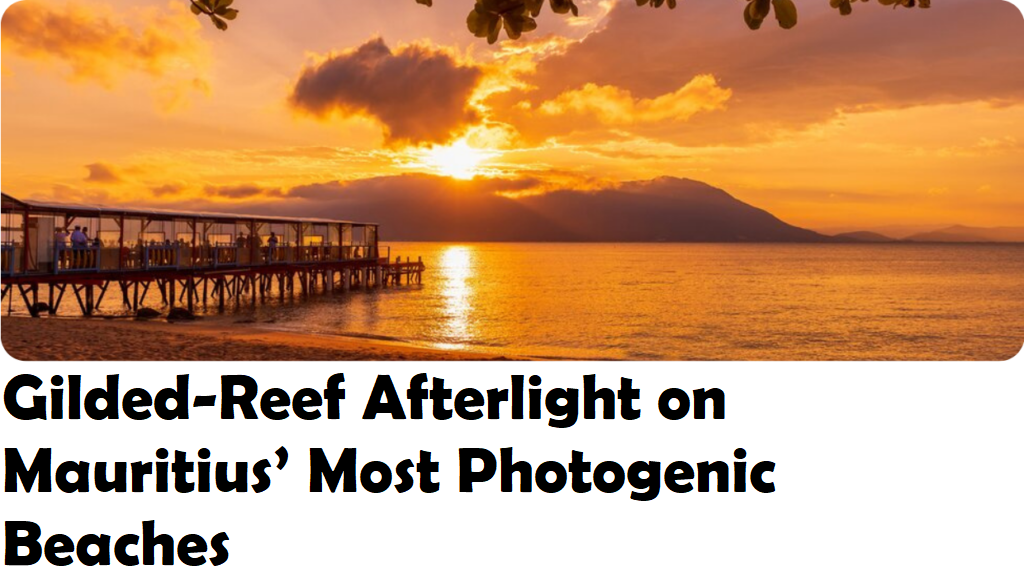
Mauritius has a talent for making twilight feel curated—like the island is quietly staging a masterpiece for anyone who knows where to stand. When the sun slips lower, the lagoons begin to glow in layered tones: lagoon-blue turning opaline, reef edges catching a gilded shimmer, and palms drawing elegant silhouettes across sand that looks almost airbrushed. This “gilded-reef afterlight” isn’t just a pretty view; it’s a mood that transforms the beach into a living postcard. For refined travelers, the most photogenic shores of Mauritius aren’t defined by crowds or hype, but by how effortlessly they deliver that final, radiant chapter of the day—soft, cinematic, and unmistakably exclusive.
1) Lagoon-Glass Horizons at Belle Mare
On the east coast, Belle Mare is where sunrise is famous—but afterlight here is a quiet luxury, too. As late afternoon fades, the sea turns into a polished sheet of color that photographers love because it reflects everything: drifting clouds, swaying casuarinas, even the calm geometry of a beach stroll. The best moments arrive when the light turns honeyed and the water looks like glass, ideal for minimal, high-end shots—bare footprints, a linen wrap, a single parasol. This is the kind of shoreline that rewards patience with elegance.
2) Coral-Glow Frames at Flic en Flac
Flic en Flac offers a different kind of photogenic charm: the reef softens the surf, creating a tranquil setting where the horizon looks endlessly smooth. At golden hour, the shallows blush with coral-pink highlights while the deeper water holds a rich sapphire tone—perfect contrast for dramatic silhouettes. Here, you can capture that signature Mauritius blend: calm lagoon foreground, warm light across palms, and a sunset that feels like it was designed for a slow pan in a film.
3) Volcanic Poetry at Le Morne
Le Morne is where Mauritius becomes bold. The mountain rises like a guardian over the beach, giving every photo a natural centerpiece. As the day fades, the afterlight wraps around the cliffs and spills across the lagoon in molten gradients—amber, copper, soft rose. Even simple frames become iconic: a solitary paddleboard, a couple walking near the shoreline, the mountain anchoring everything. This is an “editorial beach”—the kind where the landscape does half the storytelling for you.
4) Palm-Silhouette Elegance at Trou aux Biches
If you want romance with polish, Trou aux Biches delivers. The palms lean in just enough to create picture-perfect framing, while the sand stays bright and clean, reflecting a gentle glow back upward. The lagoon here often turns into a pale aquamarine mirror at dusk, making skin tones look warm and natural in photos—an underrated luxury for travelers who care about capturing the feeling, not just the scenery. Think sunset portraits that look expensive without trying.
5) Secret-Cove Serenity on Île aux Cerfs
Île aux Cerfs is famous for postcard beaches, but its true magic lies in finding quieter corners where the afterlight feels private. When the day settles, the island’s water shifts into luminous gradients—mint near the sand, cobalt further out—while the reef line catches that “gilded” edge. It’s the perfect setting for chic, slow-living visuals: a boat in the distance, a chilled drink in hand, the breeze turning everything unhurried. The photographs look like a campaign—because the atmosphere already is.
6) Reef-Kissed Minimalism at Blue Bay
Blue Bay is a color-lover’s dream. The marine park waters are intensely clear, and when the sun lowers, the reef patterns beneath the surface become part of the composition. The afterlight here feels almost underwater, with shimmering highlights that dance across shallow sandbars. Whether you’re snorkeling, floating, or simply watching the sea change shades, Blue Bay offers a refined kind of beauty—natural, pure, and quietly spectacular.
Q&A: Where to Stay for Mauritius’ Most Photogenic Afterlight
Q1: Which luxury resorts are best for sunset-and-lagoon views?
Look toward high-end coastal stays around Belle Mare and Le Morne, where beachfront design is often oriented to maximize horizon drama. Properties with wide beach frontage and calm lagoons tend to deliver the most consistent golden-hour scenery.
Q2: What’s ideal for honeymoon-style, ultra-romantic evenings?
Choose resorts near Trou aux Biches or Flic en Flac with private beach dining, soft lighting, and palm-framed shores. The mood here leans naturally romantic—perfect for slow walks, silhouettes, and intimate photographs.
Q3: Any standout options for a “private island day” feeling?
A resort that offers curated excursions to Île aux Cerfs (or similar island/lagoon experiences) is the move. The combination of boat travel, lagoon color, and quiet coves creates a premium, storybook aesthetic.
Q4: Where should refined travelers stay for reef and marine-park beauty?
Consider stays that make Blue Bay easy to reach—especially if you love snorkeling visuals and luminous water tones. Reef clarity plus afterlight equals effortless, high-impact photography.
Conclusion
“Gilded-reef afterlight” is Mauritius at its most flattering—when the lagoons glow, the reef lines shimmer, and the island’s beaches look impossibly composed. From Belle Mare’s glassy horizons to Le Morne’s iconic silhouette, each shore offers its own signature aesthetic: minimalist luxury, coral-tinted calm, mountain-backed drama, or marine-park brilliance. For travelers who crave beauty that feels private and premium, these photogenic beaches don’t just deliver images—they deliver an experience of dusk as an exclusive ritual, where every evening ends like a polished, golden scene you’ll want to relive again and again.